Rules on Election Contests
RULE 15. Jurisdiction. – The Tribunal is the sole judge of all contests relating to the election, returns, and qualifications of the Members of the House of Representatives. To be considered a Member of the House of Representatives, there must be a concurrence of the following requisites: (1) a valid proclamation; (2) a proper oath; and (3) assumption of office.
RULE 16. How Initiated. – An election contest is initiated by the filing of a verified election protest or a verified petition for quo warranto against a Member of the House of Representatives. An election protest shall not include a petition for quo warranto. Neither shall a peition for quo warranto include an election protest. (As amended per HRET Resolution No. 4, Series of 2019 of the Tribunal approved on April 4, 2019)
RULE 17. Election Protest. – A verified election protest contesting the election or returns of any Member of the House of Representatives shall be filed by any candidate who has duly filed a certificate of candidacy and has been voted for the same office, within fifteen (15) days from June 30 of the election year, if the winning candidate was proclaimed on or before the said date. However, if the winning candidate was proclaimed after June 30 of the election year, a verified election protest shall be filed within fifteen (15) days from the date of proclamation. (As amended per HRET Resolution No. 16, Series of 2018 approved on September 20, 2018)
RULE 18. Quo Warranto. – A verified petition for quo warranto on the ground of ineligibility may be filed by any registered voter of the congressional district concerned, or any registered voter in the case of party-list representatives, within fifteen (15) days from June 30 of the election year, if the winning candidate was proclaimed on or before the said date. However, if the winning candidate was proclaimed after June 30 of the election year, a verified election protest shall be filed within fifteen (15) days from the date of proclamation. The party filing the petition shall be designated as the petitioner, while the adverse party shall be known as the respondent. (As amended per HRET Resolution No. 16, Series of 2018 approved on September 20, 2018)
Legal Fees..
RULE 34. Filing Fees. – No protest, counter-protest or petition for quo warranto shall be deemed filed without the payment to the Tribunal of the filing fee in the amount of twenty thousand pesos (P20,000.00). (click for more)
RULE 35. Cash Deposit. – In addition to the fees prescribed in the preceding Rule, each protestant, counter-protestant or petitioner in quo warranto shall make a cash deposit with the Tribunal in the following amounts: (click for more)
RULE 36. Other Legal Fees. – The following legal fees shall be charged and collected for: (click for more)
ACTIVITIES AND UPDATES


HRET Cases
1987 - 1992 Congressional Term
1992 - 1995 Congressional Term
1995 - 1998 Congressional Term
1998 - 2001 Congressional Term
2001 - 2004 Congressional Term
2004 - 2007 Congressional Term
2007 - 2010 Congressional Term
2010 - 2013 Congressional Term
2013 - 2016 Congressional Term
2016 - 2019 Congressional Term
2019 - 2022 Congressional Term
2022 - 2025 Congressional Term
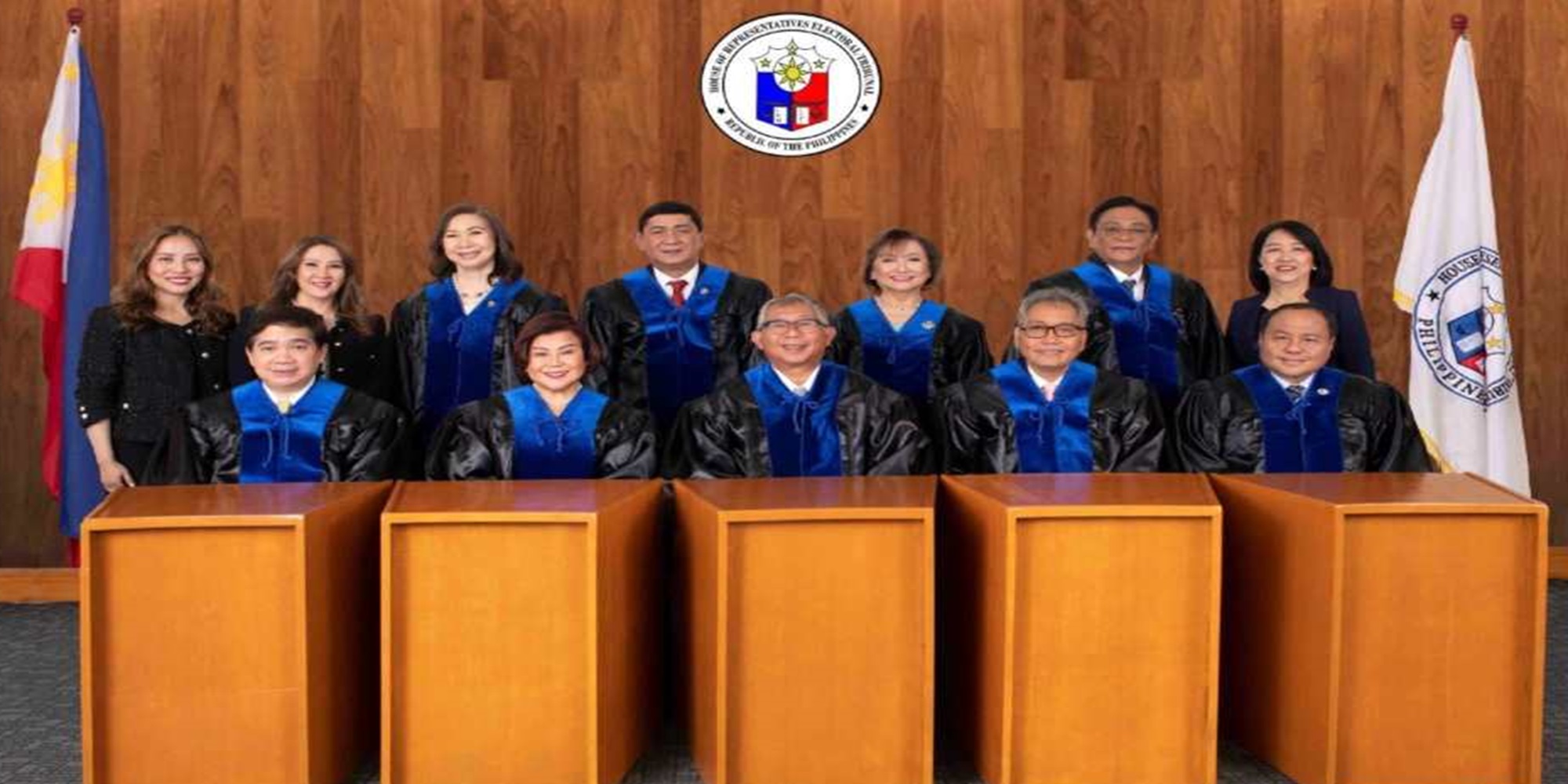
RULE 4. Composition. – The Tribunal shall be composed of nine (9) Members, three (3) of whom shall be Justices of the Supreme Court to be designated by the Chief Justice, and the remaining six (6) shall be Members of the House of Representatives who shall be chosen on the basis of proportional representation from the political parties and the parties or organizations registered under the party-list system represented therein. The Senior Justice in the Tribunal shall be its Chairperson.
Notice of E-filing

Flowchart of Protest


GAD Spot
Fellowship and Teambuilding